
How Arrest Warrants Work in Tazewell County
Every Tazewell County arrest warrant begins as a written complaint examined under oath. Virginia Code § 19.2-72 spells out the pieces: a description of the accused and the offense, a command to arrest and bring the person before the court, probable-cause review, and the issuing signature. A magistrate or an authorized judge performs that judicial role. Police can bring the complaint forward. An officer still cannot replace the judicial officer who reviews the facts and issues the process. A case may open in magistrate court or General District Court, and a felony can later proceed in Circuit Court.
How Tazewell County Arrest Warrant Starts
Issuance starts with a complaint and facts sworn under oath. The judicial officer weighs probable cause and signs the written command. A Tazewell County warrant is not an indictment, a judgment, a search authorization, or a summons. The official Virginia Code § 19.2-72 sets out the felony procedure and each required part.
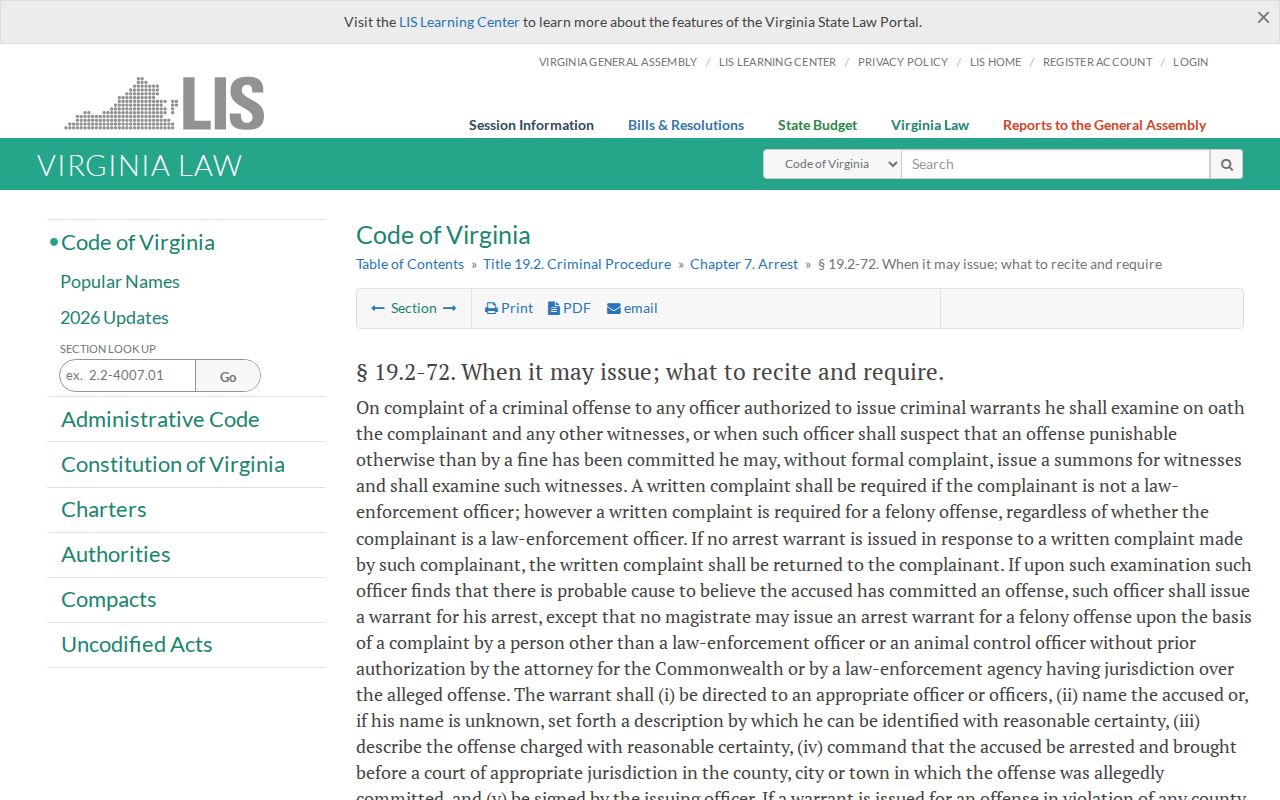
The graphic lays out the statute’s process steps for Tazewell County arrest warrants, not one real case or local warrant record.
Arrest Warrants: What They Contain
Start with the issuing court and the case number. From there, a Tazewell County warrant document may carry the accused’s name or a physical description, the offense, the judicial officer who signed it, the date, the command to arrest, and later service or return notes. Bond terms come from the judicial order itself. There is no fixed county bond schedule to rely on.
| Case number | number printed on process; no single public warrant-number format was located. |
|---|---|
| Subject | Name or description in the official record; do not republish private identifiers. |
| Offense | Charge or statute description where public and not sealed. |
| Issuing court | Magistrate or court named on the signed order. |
| Command | Direction to arrest and bring the person before an appropriate judicial officer. |
| Return | Service, execution, or later court action where available. |
Tazewell County Arrest Warrant Schema
One warrant record can live in several Tazewell County offices at once. A court docket may show the case number and what happened later. A magistrate record may hold the initial process, while a law-enforcement return shows when and how service happened. Sealed affidavits and protected details stay out of the public file. Treat the schema as a reading aid, not a promise that every field is public. The clerk can tell you which record answers your question.
How Warrants Get Served in Tazewell County
The Sheriff and town police handle service in Tazewell County. Virginia Code § 19.2-76 lets a warrant run anywhere in Virginia, and it sets out the return and appearance steps that follow an arrest outside the trial locality. That is why an arrest far from home can still involve a local magistrate before the person comes back to Tazewell. After the arrest, booking usually happens at the regional jail, and the person goes before a judicial officer. The jail holds custody. The issuing court controls the case. Tazewell County posts no public bond-window hours and no universal release timeline.
Tazewell County Warrant Service Beyond the County
Statewide execution does not mean a statewide public active-warrant list exists. A Tazewell County warrant served in another county can mean a first appearance there, then a transfer or return later. Ask the issuing court which record confirms the next court date. The execution and return statute spells out the service framework.
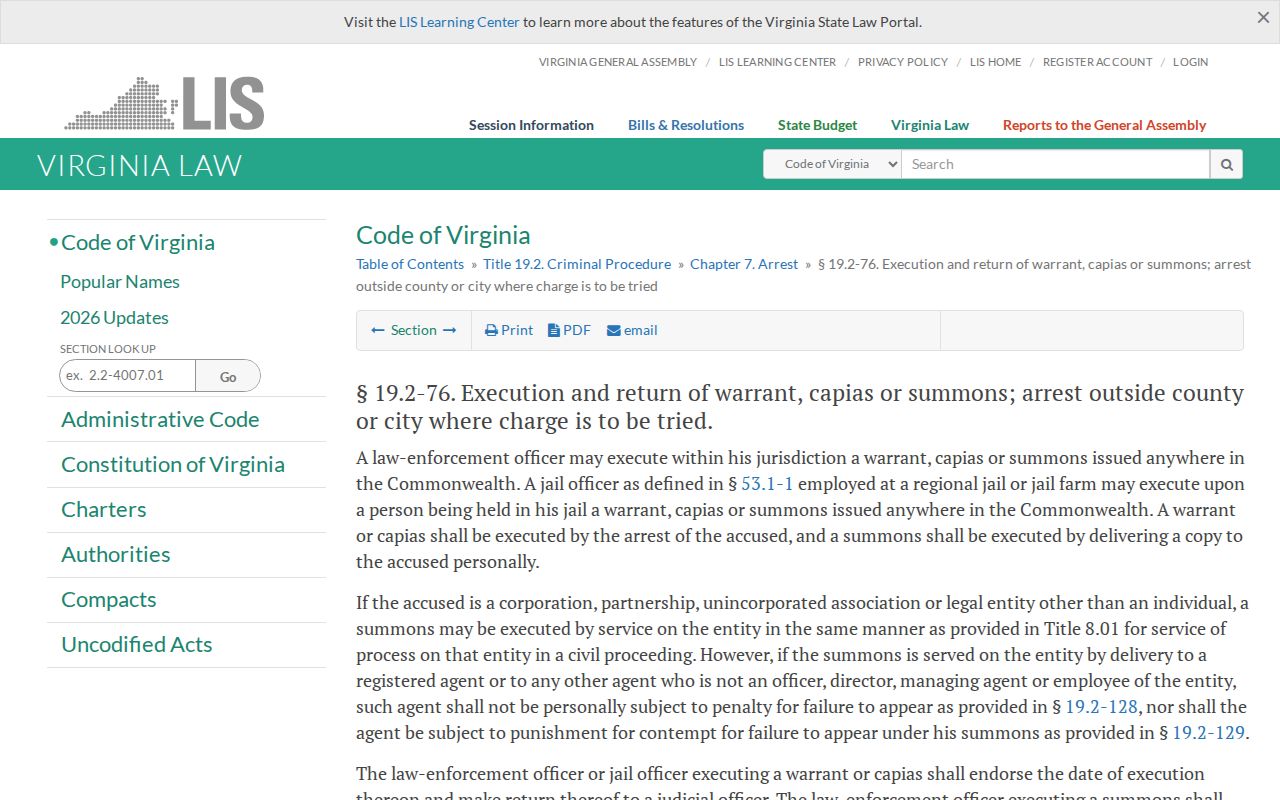
Service can cross locality lines while court and jail records remain with different offices.
Arrest Warrants, Summonses, and Bench Warrants
Each paper carries a different command. A summons tells a person to show up, while an arrest warrant commands custody. A Tazewell County bench warrant or capias can follow a missed obligation or later court action. The bench-warrant record breaks down local show-cause and capias terms.
| Feature | Arrest Warrant | Summons | Bench Warrant |
|---|---|---|---|
| What it does | Commands arrest and appearance. | Directs appearance without the same arrest command. | Orders arrest after a court obligation or later action. |
| Common basis | Complaint and probable cause. | Notice to appear in a case. | Missed date or failure to comply. |
| Record holder | Issuing court or magistrate, with service records. | Court that set the appearance. | Court with the original and subsequent action. |
| Next step | Confirm with counsel and the issuing office. | Follow the date and instructions. | Ask about appearance, recall, or motion. |
Federal Warrants Use a Separate Record System
Tazewell County sits in the Western District of Virginia. Federal cases run through the U.S. District Court and PACER, not Virginia OCIS. PACER is a federal docket search, not a full active-warrant registry, and sealed matters may not show at all. The Western District court site carries court information for the region, and Abingdon is a local federal courthouse location. The U.S. Marshals courthouse locations page maps federal courthouse routes in the district, including Abingdon.
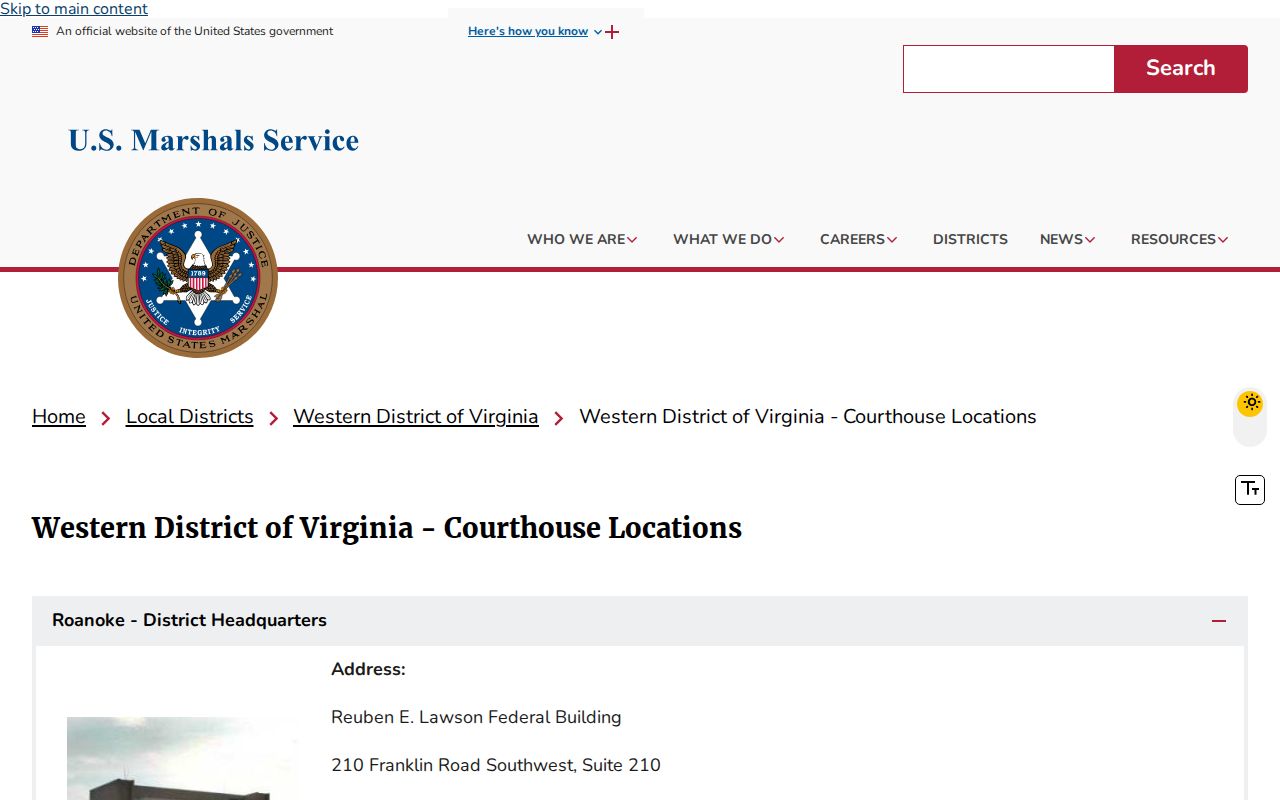
Federal process in Tazewell County follows its own court and agency route. PACER’s official page covers federal docket access and its fees.

A federal warrant lives in a separate record system, so no Tazewell County Sheriff listing or federal docket page can account for every warrant that exists.
Handling an Arrest Warrant in Your Name
Pin down the case number and court first. OCIS or your official paperwork will do that. Then call the Tazewell County clerk who issued the warrant and ask what options exist, whether that is a motion, an appearance, a bond hearing, or an attorney filing. If the person is already in custody, the magistrate or court sets release terms and the clerk and jail do not decide bond, so keep every order and receipt.
Important: Speak with counsel about a safe, lawful appearance. Do not rely on an online result or caller’s promise to settle the process.
Tazewell County Arrest Warrant Handoff Map
Each office here holds a different piece of the file. The magistrate handles early probable-cause and bail questions. General District Court keeps most adult traffic, misdemeanor, and preliminary matters, while Circuit Court takes the later felony and appeal work. For service details, ask the Sheriff or town police; for custody status, ask the regional jail. Go to whichever office holds the record you need, or use the Tazewell County warrant records home page for the full contact map.